
Every day, millions of pounds of cargo travel across the United States without any hiccups or incidents. It wouldn’t happen without proper tie-downs.
Despite their importance, a significant knowledge gap remains regarding tie-downs. Many professionals, even those in automotive and logistics spaces, are uncertain about how they work, what regulations govern them, or why they matter.
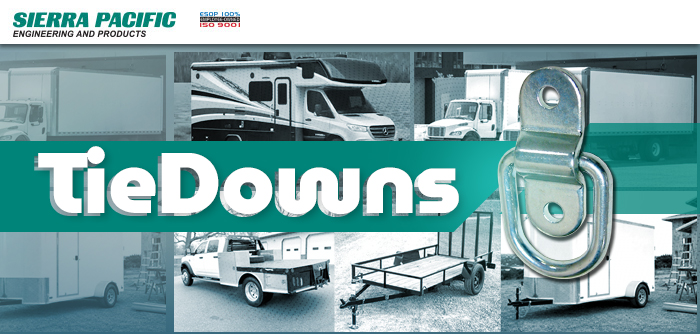
Tie-downs are relied on across OEMs and various industries, such as construction, agriculture, automotive transportation, freight and logistics, military and defense, and powersports (UTVs, ATVs, and motorcycles). They are most commonly seen on:
- Flatbed trucks
- Utility trailers
- Enclosed cargo trailers
- Commercial delivery trucks
- Recreational vehicles (RVs)
Tie-downs are important because they prevent cargo from shifting or falling during transportation. They also protect drivers, passengers, and other road users, reducing damage to cargo and vehicles.
Design Considerations for Tie-Downs
Tie-downs are required to comply with cargo securement regulations, such as those established by the Federal Motor Carrier Safety Administration (FMCSA) for commercial motor vehicles.
Working Load Limits & Ultimate Breaking Strengths
When selecting tie-down hardware, several design considerations should be evaluated to ensure the component can perform reliably in its intended application. Working Load Limit (WLL) refers to the maximum load a tie-down is designed to safely support during normal use. This is an important specification when selecting hardware because tie-downs must withstand the forces generated by braking, acceleration, cornering, and road vibration. The tie-down WLL should be appropriate for the weight and type of cargo you are securing.
Ultimate Breaking Strength (UBS) refers to the amount of force a tie-down or component can withstand before it is expected to fail under testing. While WLL represents the safe working capacity of the component, UBS provides insight into its maximum tested strength and overall structural durability. Maintaining an appropriate safety margin between WLL and UBS is essential when selecting securement hardware.
Material Choices for Tie-Downs
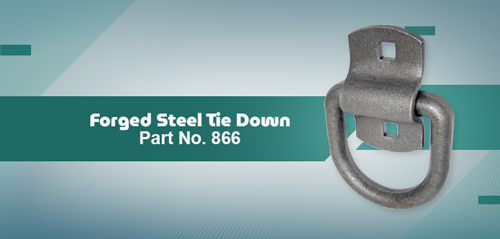
The material selected to manufacture a tie-down also plays an important role in its performance. Common materials include forged or stamped steel, stainless steel (SS), and high-strength alloys. Forged steel is often selected for heavy-duty applications due to its strength and durability, while SS is advantageous in applications where corrosion resistance is a top priority. High-strength alloys may also be used when an application requires increased strength without significantly increasing hardware weight.
Corrosion Protection and Mounting Styles
Another important concern is corrosion resistance, especially for tie-downs used on trailers and other vehicles exposed to rain, moisture, dirt, dust, and other harsh environmental conditions. Consider adding protective finishes such as zinc plating and powder coating to help protect the steel components.
Finally, mounting style should be selected based on vehicle or trailer design, available space, and application intent. Tie-downs are available in a variety of configurations, including bolt-on, weld-on, folding, recessed, and surface-mounted. Flush or recessed tie-downs can minimize protrusions and help keep trailer decks clear, while weld-on designs provide a permanent, heavy-duty attachment point. Choosing the perfect mounting configuration helps ensure the tie-down integrates properly with the vehicle structure while remaining accessible and user-friendly.
How Industrial Hardware Manufacturers Maintain Compliance
The regulations issued by the Department of Transportation (DOT) and other regulatory bodies make high-quality tie-down hardware essential, not optional. Every anchor point must be designed to:
- Withstand high tensile forces
- Resist fatigue from repeated loading
- Maintain structural integrity over years of service
- Safely transfer loads into the trailer or vehicle structure
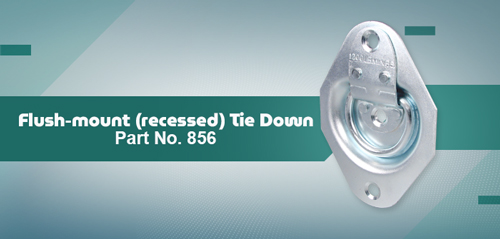
Flush-mount (recessed) tie-down anchors are installed into the trailer deck to provide a secure cargo attachment point while minimizing hardware protrusion. Using flush-mount tie-downs is particularly useful on trailers because:
- Minimize trip hazards
- Keep the trailer floors clear
- Make loading and unloading easier
- Protect the anchor
- Provide a convenient securement point
For industrial hardware manufacturers, tie-downs represent more than a simple attachment point. They are engineered components that play a critical role in vehicle safety, cargo securement, and overall system performance. From material selection and load ratings to mounting configuration and corrosion resistance, every aspect of a tie-down design can affect its ability to perform reliably in demanding transportation environments.
At Sierra Pacific Engineering and Products (SPEP), we have engineering experts on our team who consider these important factors, such as how the hardware will be used, what loads it will experience, and the environment in which it will operate.
Want to talk more about tie-downs?
Whether you need help selecting an existing tie-down or desire to develop a customized solution, let us put our experience to work for you. Contact the SPEP team today to discuss your application and find a tie-down best built for the job.
Editor’s Picks

Sierra Pacific Engineering College Scholarship Program
Feb 7, 2022
What is Supply Chain Management, and Why Is It Important?
Jan 13, 2022
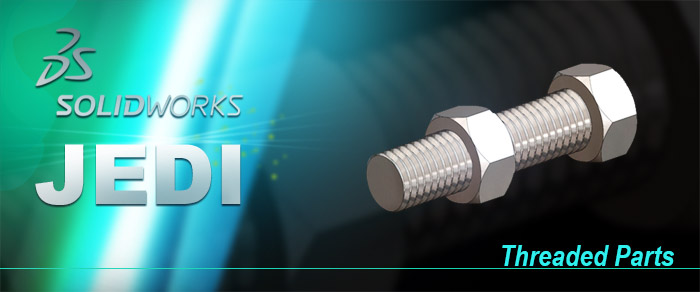
How To Make Threads in Solidworks: Become a Solidworks Expert
Nov 10, 2020
Recent Posts
A supplier’s perspective on the data center boom
Data centers continue to power the digital world, and their reach is growing. AI, cloud computing, and the relentless demand for data collection and analytics are making these high-tech warehouses more important than ever. For professionals in data center...
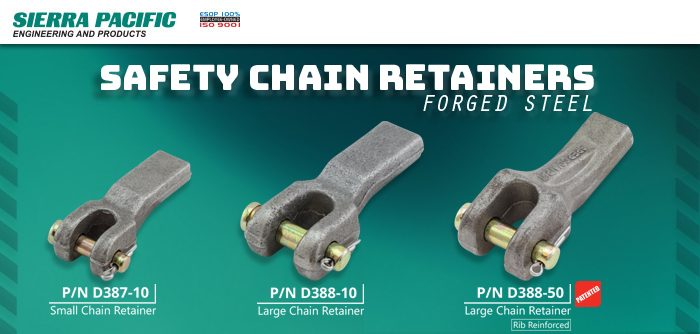
Chain Retainers
Why High-Quality Chain Retainers Matter: Strength, Safety, and Reliability In industrial settings, even small parts can significantly impact safety and performance. Chain retainers are a great example; they keep safety chains in place to help prevent costly and...
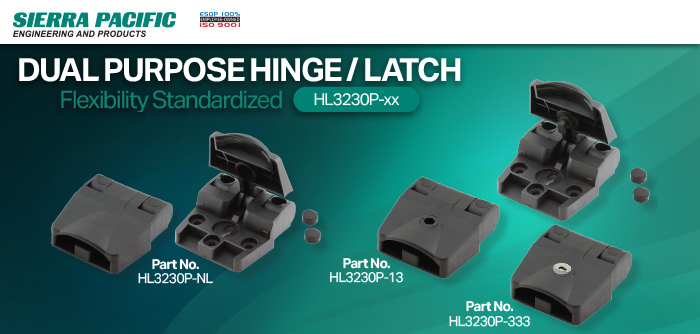
The Ultimate Access Upgrade
Designing access panels, enclosures, and HVAC systems is all about balance: making things flexible for users while keeping your design simple, reliable, and affordable. Too often, traditional hardware forces you to compromise — settling for a hinge that only opens one...